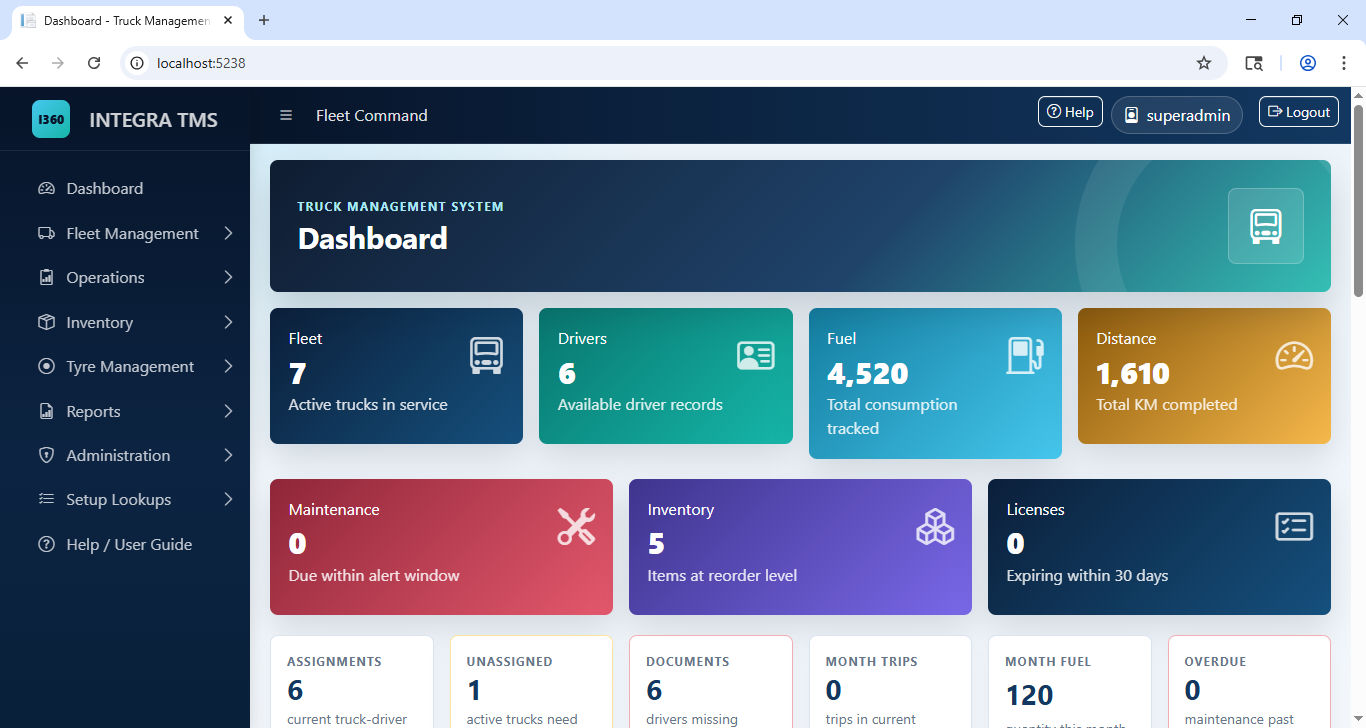
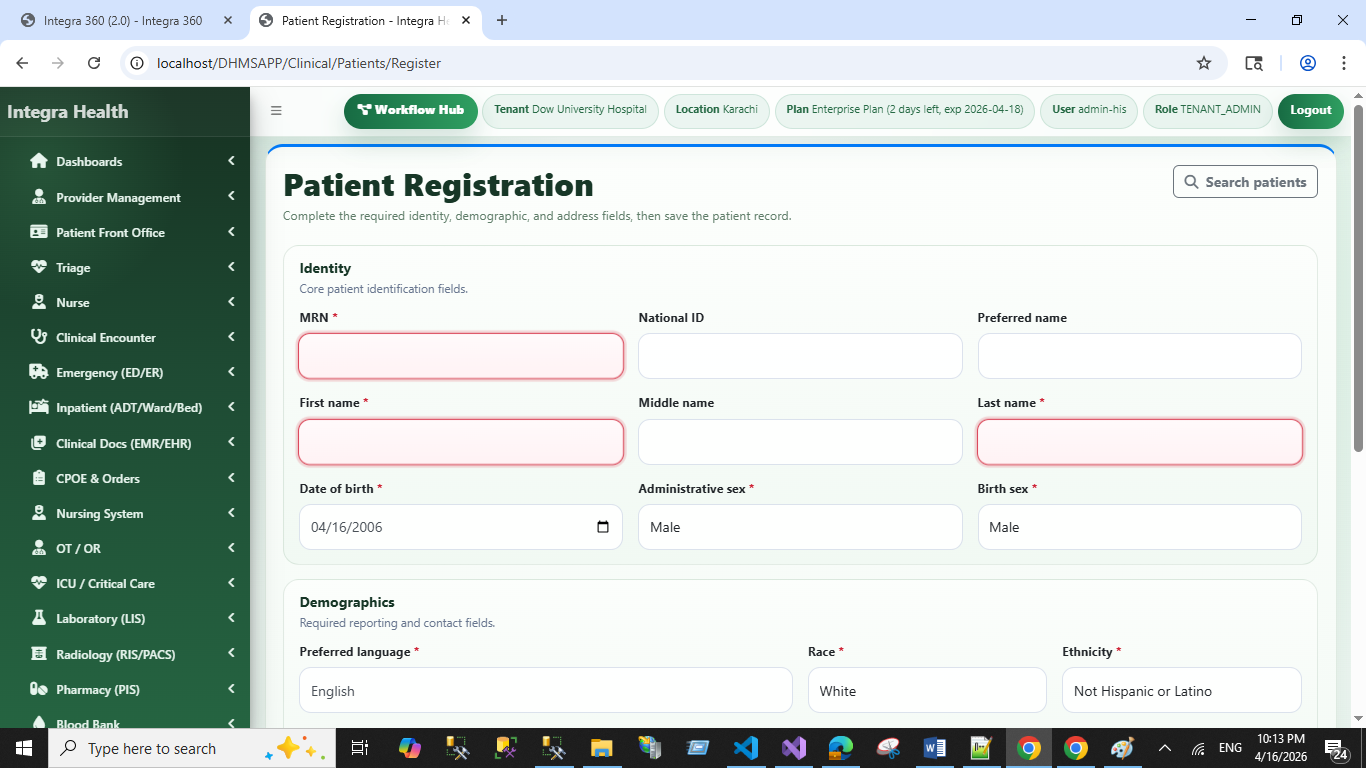
HMIS patient registration screenshot
Patient Registry
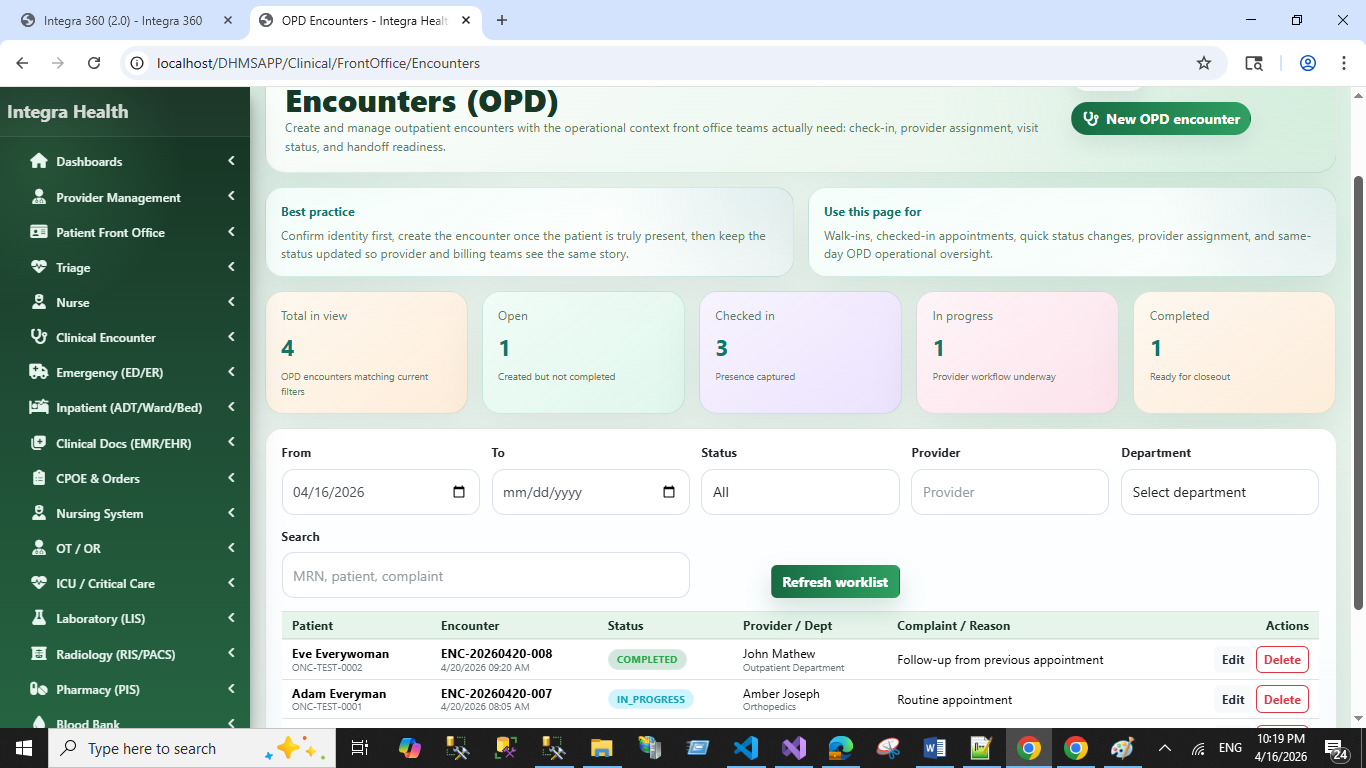
HMIS OPD encounters screenshot
OPD Encounters
01 Use Case define AI task
02 Knowledge prepare source content
03 Assistant build AI workflow
04 Guardrails review and control
05 Monitor improve responses

AI Tools & AI Agents

Practical AI systems tied to approved knowledge and real work.

i-360 develops AI assistants, document-processing workflows, task-focused agents, and AI features for existing software. Each solution is defined around a specific user, source of information, permitted action, review point, and measurable operational outcome.

What a client can receive

  • Deployed web-based or embedded AI assistant
  • Governed knowledge base with source citations
  • Document extraction with confidence and human review
  • AI workflows with integrations, logs, and controls

Discover the Right Use Case

An AI opportunity assessment reviews selected workflows, identifies suitable and unsuitable use cases, defines dependencies and risks, and produces a phased implementation blueprint for an approved pilot.

Ground Answers in Approved Content

Knowledge assistants can use policies, manuals, procedures, product documentation, and training material with source references, access controls, feedback, and administrative management.

Keep People in Control

Document and workflow automation can classify, extract, validate, and route routine work while uncertain, exceptional, or consequential cases remain subject to authorized human review.

AI services matched to the business need

Engagements can cover AI opportunity assessment, RAG knowledge assistants, intelligent document processing, department copilots, AI integration for existing software, agent evaluation, governance controls, and managed AI operations. The selected scope states what will be delivered, what data and systems are required, how results will be evaluated, and what remains outside the automation boundary.

Typical evaluation areas

  • Answer relevance and correct source citation
  • Document classification and field-extraction quality
  • Permission boundaries and restricted-content handling
  • Tool use, duplicate-action prevention, and escalation
  • Behavior after model, prompt, or knowledge changes

Practical Examples

What these AI services can look like in day-to-day work

These are illustrative workflows, not client case studies or guaranteed results. The final outcome depends on the approved scope, source quality, integrations, permissions, testing, and human-review requirements.

AI Opportunity Assessment

What the client receives

  • Selected workflow review
  • Repetitive and costly task list
  • Suitable AI opportunities
  • Unsuitable or high-risk use cases
  • Recommended first pilot
  • Required integrations
  • Technical architecture
  • Estimated implementation effort
  • Expected business benefits
  • Success measurements
  • Risks and dependencies
  • Phased roadmap

Tangible deliverable

An AI Implementation Blueprint that can support approval, budgeting, and the start of a defined project.

Business value

  • Avoid investing in the wrong AI idea
  • Understand implementation effort before development
  • Identify measurable outcomes
  • Reduce technical and operational risk
  • Create an internal business case
  • Move from experimentation to a defined project

Best suited for

Companies exploring AI for the first time, businesses comparing several automation ideas, software companies planning AI features, organizations with manual administrative workflows, and clients needing a roadmap before approving a larger project.

Medical practice referral intake

An assessment can examine time spent opening referral attachments, reading documents, entering patient data, checking missing fields, and routing work. The resulting pilot may extract selected data, flag omissions, and create a staff review queue.

Logistics incident intake

Driver reports arriving through email, exported messages, and spreadsheets can be assessed for incident classification, vehicle and driver extraction, urgent routing, and daily management summaries.

Software product AI roadmap

When a software vendor is choosing among a chatbot, reporting assistant, or workflow automation, the assessment compares users, product data, support work, feasibility, and the feature with the clearest customer value.

Enterprise AI Knowledge Assistant

What the client receives

  • Secure user access
  • Document upload and management
  • Natural-language search
  • AI-generated answers
  • Source-document references
  • Role-based access
  • Usage tracking
  • Feedback controls
  • Administrative management
  • Basic monitoring
  • Production deployment

Tangible deliverable

A working web-based or embedded AI assistant connected to the company’s approved documents.

Business value

  • Reduce information-search time
  • Shorten employee onboarding
  • Reduce repeated questions
  • Improve answer consistency
  • Reduce support response time
  • Preserve organizational knowledge
  • Improve access to approved procedures
  • Reduce reliance on individual employees

Best suited for

Businesses with many internal documents, healthcare organizations, software and technology companies, manufacturers, product distributors, professional-service firms, and organizations with large support or operations teams.

Employee policy assistant

Employees can ask about leave, expense approval, remote-work approval, or onboarding documents and receive an answer from approved HR policies with a source reference.

Healthcare operations assistant

Authorized staff can ask how incomplete referrals are handled, which department receives a request, how cancellations work, or which form is required, using approved procedures.

Product-support assistant

Support staff can search installation guides, specifications, warranty rules, troubleshooting manuals, and return procedures without manually opening many documents.

Internal technical assistant

Technical teams can retrieve approved architecture, deployment, API, troubleshooting, coding-standard, and escalation guidance.

AI-Ready Knowledge Base

What the client receives

  • Structured knowledge repository
  • Document categories and metadata
  • Ownership assignments
  • Version control
  • Approval status
  • Effective and expiry dates
  • Access permissions
  • Archive handling
  • Search capability
  • Citation support
  • Content-management procedures
  • Administrative training

Tangible deliverable

A centralized, governed company knowledge system ready for employee use and future approved AI applications.

Business value

  • Reduce outdated information
  • Improve document accountability
  • Prepare content for AI use
  • Reduce operational confusion
  • Improve staff training
  • Provide traceable sources
  • Support audits
  • Protect restricted content

Best suited for

Regulated organizations, healthcare and manufacturing companies, software vendors, businesses preparing for AI adoption, and companies with document duplication or version-control problems.

Policy governance

A controlled repository can identify the current policy, archive expired versions, assign owners, show effective dates, and restrict AI retrieval to approved content.

Healthcare procedure library

Scheduling procedures, billing instructions, referral rules, compliance policies, and training material can be organized so authorized staff use the current approved version.

Product documentation system

Manuals, technical sheets, safety instructions, and maintenance procedures can be organized by product, model, region, language, version, and department.

Intelligent Document Processing

What the client receives

  • Document upload or intake
  • Document-type classification
  • Field extraction
  • Validation rules
  • Confidence scoring
  • Human review screen
  • Exception queue
  • Export or system integration
  • Processing history
  • Operational dashboard
  • Accuracy testing

Tangible deliverable

A working document-processing workflow that transforms selected document types into structured data.

Business value

  • Reduce manual data entry
  • Reduce processing time
  • Improve consistency
  • Reduce copy-and-paste errors
  • Create searchable document data
  • Improve turnaround time
  • Create traceable processing history
  • Let staff focus on exceptions

Best suited for

Healthcare organizations, finance and accounting departments, logistics companies, insurance businesses, professional-service firms, and organizations processing repeated document types.

Supplier invoices

The workflow can extract supplier, invoice number and date, purchase order, line items, tax, and total. Low-confidence fields go to staff before approved data reaches accounting.

Healthcare referrals

Patient, contact, referring-provider, requested-service, insurance, and attachment details can be prepared for review while missing information creates a follow-up task.

Proof of delivery

Shipment number, delivery date, receiver, status, damage notes, and signature presence can be extracted from selected delivery documents.

Application forms

Forms received by email or upload can be extracted, checked for required fields, and routed for follow-up when incomplete.

Custom Business AI Assistant

What the client receives

  • Requirements analysis
  • Assistant design
  • Secure access
  • Connection to approved data
  • Defined instructions
  • Permitted tools
  • Business rules
  • User interface
  • Audit logs
  • Feedback controls
  • Testing
  • Production deployment
  • User training

Tangible deliverable

A working, task-focused AI assistant for the selected department or team.

Business value

  • Reduce preparation time
  • Improve staff productivity
  • Shorten response times
  • Improve information access
  • Standardize repetitive work
  • Reduce manual report preparation
  • Improve employee support

Best suited for

Sales, customer-support, operations, and management teams, as well as software companies and professional-service businesses.

Sales assistant

Summarize leads, prepare meeting notes, draft follow-ups, search product content, suggest proposal material, and identify missing opportunity details.

Customer-support assistant

Search approved support content, summarize customer history, suggest a response, classify issues, recommend escalation, and prepare a support ticket.

Operations assistant

Summarize queues, identify overdue cases, extract information from notes, prepare task lists, flag missing data, and draft operational summaries.

Executive reporting assistant

Summarize approved KPI data, highlight changes, draft management commentary, compare periods, and list areas requiring attention.

Private AI Chatbot for Software Products

What the client receives

  • Embedded chat interface
  • White-label branding
  • Product-document knowledge base
  • Authentication integration
  • User-context controls
  • Support-ticket integration
  • Escalation workflow
  • Conversation logging
  • Feedback controls
  • Administrative dashboard
  • Deployment support

Tangible deliverable

A working branded AI chatbot embedded inside the client’s software.

Business value

  • Reduce basic support requests
  • Improve product usability
  • Provide support outside business hours
  • Reduce onboarding time
  • Increase product value
  • Support premium subscription features
  • Improve user retention

Best suited for

SaaS companies, software product owners, healthcare software providers, enterprise application vendors, and companies with large product-document libraries.

Product-help assistant

Users can ask how to create an account, export a report, understand a required field, or configure notifications, with answers grounded in product documentation.

Contextual application help

The assistant can use the current application page as permitted context and present guidance relevant to that screen.

Support-ticket creation

When the answer is insufficient, the assistant can collect the issue, current page, and relevant details before creating a support handoff.

Account-data explanation

Where authorized, it can summarize selected open orders, pending requests, recent transactions, or support-ticket status.

AI Agent Evaluation and Quality Testing

What the client receives

  • Evaluation plan
  • Test dataset and cases
  • Correctness and citation checks
  • Hallucination testing
  • Permission testing
  • Prompt-injection testing
  • Tool-use and escalation testing
  • Performance results
  • Failure analysis
  • Remediation recommendations
  • Regression-test package

Tangible deliverable

An AI Quality and Risk Evaluation Report supported by repeatable test cases.

Business value

  • Reduce production failures
  • Identify hallucination risk
  • Improve user trust
  • Verify permissions
  • Support release decisions
  • Create measurable quality standards
  • Detect issues after model or prompt changes

Best suited for

Companies launching AI assistants, software vendors, healthcare organizations, businesses using AI in operational workflows, and clients needing independent AI quality review.

Knowledge assistant evaluation

Tests verify approved-source answers, correct citations, out-of-scope refusal, department permissions, and avoidance of retired policies.

Document-processing evaluation

Tests measure classification, field extraction, missing-field detection, confidence behavior, and exception handling.

Workflow-agent evaluation

Tests check correct tool use, correct record updates, required human approval, duplicate-action prevention, and activity logging.

Model-change regression

A repeatable evaluation suite compares behavior after a model change before a production release decision.

AI Governance and Usage Controls

What the client receives

  • AI use-case inventory
  • Approved and restricted-use policies
  • User-role matrix
  • Data-access rules
  • Human approval requirements
  • Model-provider requirements
  • Logging requirements
  • Source approval process
  • Incident procedure
  • Evaluation schedule
  • Change-management process
  • Responsibility matrix

Tangible deliverable

An AI Governance and Operational Control Package that can guide internal implementation. It is not a substitute for legal or regulatory advice.

Business value

  • Reduce uncontrolled AI use
  • Improve accountability
  • Protect sensitive information
  • Define human oversight
  • Create consistent implementation rules
  • Prepare for larger AI projects
  • Improve confidence among management and users

Best suited for

Organizations moving from informal AI experimentation to controlled business use, especially where sensitive data, multiple departments, human approvals, or formal release controls are involved.

Department AI rules

Define which teams may use AI, what data may be submitted, which use cases need approval, which outputs require review, and how activity is recorded.

Healthcare AI controls

Separate administrative and clinical workflows, define clinician approval, protect patient information, and document how incorrect output is reported.

Software product governance

Define supported model providers, customer-data boundaries, logging, retention, release testing, and incident escalation.

Forward-Deployed AI Engineering

What the client receives

  • Dedicated engineering capacity
  • Business-process analysis
  • Solution design
  • Integrations
  • AI workflow development
  • Prototype and production delivery
  • User testing and evaluation
  • Operational support
  • Ongoing improvements
  • Documentation

Tangible deliverable

A dedicated delivery capability that produces approved AI and automation solutions inside the client’s environment.

Business value

  • Access AI expertise without permanent hiring
  • Accelerate implementation
  • Reduce coordination across vendors
  • Improve solutions through user feedback
  • Deliver several workflows over time
  • Establish a continuing technical partnership

Best suited for

Organizations that need ongoing, closely integrated AI engineering across several workflows rather than a single isolated implementation.

Software company roadmap

An ongoing engineering engagement can sequence a documentation chatbot, report assistant, support-ticket automation, and customer-data summaries.

Healthcare operations program

A phased program can address referral intake, a policy assistant, scheduling communication, document summaries, and operational reporting.

Logistics automation program

A delivery team can sequence incident intake, delivery-document processing, maintenance reporting, customer-status automation, and management dashboards.

Managed AI Operations

What the client receives

  • System monitoring and error review
  • Usage and AI-cost reporting
  • Failed-workflow analysis
  • Prompt and knowledge updates
  • Regression testing
  • Security updates
  • Model-provider changes
  • User-feedback review
  • Backup checks
  • Incident support
  • Minor workflow improvements
  • Scheduled service review

Tangible deliverable

A managed production AI service with the monitoring, reports, testing, and improvements defined by the selected plan.

Business value

  • Keep the solution reliable
  • Reduce operational risk
  • Control AI usage cost
  • Maintain document accuracy
  • Respond to model changes
  • Improve the system over time
  • Provide predictable support
  • Protect the original investment

Best suited for

Organizations operating production AI assistants, document workflows, or agents that require continuing monitoring, knowledge maintenance, evaluation, provider management, and support.

Knowledge assistant management

Add approved documents, retire old content, review unanswered questions, test common queries, report usage, and improve weak answers.

Document workflow monitoring

Review extraction failures, low-confidence fields, unrecognized documents, volume, handling time, and repeated exceptions.

AI model change management

Test a provider’s new model, compare results, identify risk, plan the change, and update configuration after approval.

Workflow optimization

If operating data shows unnecessary escalations, rules can be adjusted and the change tested before release.

Define the first use case

Start with one workflow and a clear result.

Share the users, source content, repeated task, required integrations, review process, and expected business improvement. i-360 can help turn that information into an assessable pilot scope.

Discuss an AI project

AI Services FAQ

Questions about business AI delivery

Can an AI assistant answer from our own documents?

Yes. A knowledge assistant can retrieve from approved client content and return answers with source references. Reliability also depends on content quality, permissions, chunking, retrieval, evaluation, and a defined no-answer behavior.

Can AI automate documents without removing human review?

Yes. A workflow can classify documents, extract fields, apply validation, and route low-confidence or exceptional cases to an authorized reviewer before data is accepted or sent to another system.

Can i-360 add AI to an existing application?

Where the application and hosting environment permit integration, i-360 can add backend AI services and user-interface features without requiring a complete application replacement.

What affects AI project time and cost?

Key factors include source readiness, document volume, workflow complexity, integrations, user roles, model provider, security, review requirements, evaluation depth, deployment environment, and ongoing monitoring.

Does i-360 treat AI output as automatically correct?

No. Sensitive or consequential workflows should include approved content, access controls, traceable sources, confidence handling, testing, and qualified human review.

Can a healthcare AI assistant make clinical decisions?

The services described here support administrative knowledge and operations. They do not independently diagnose patients, prescribe treatment, or replace licensed clinical judgment.

Free consultation